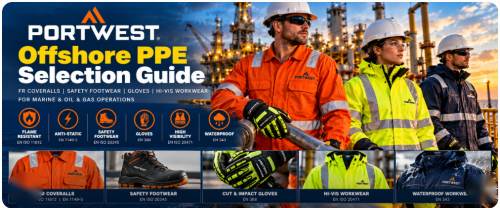
Choosing the Right PPE for Marine and Offshore Operations
Offshore oil and gas platforms, FPSOs, LNG facilities, commercial vessels and marine terminals present demanding working conditions.
Personnel may be exposed to fire and flash-fire hazards, electrical risks, heavy equipment, sharp materials, slippery surfaces, poor visibility and extreme weather.
Selecting appropriate Personal Protective Equipment (PPE) is therefore essential for maintaining workplace safety.
Portwest offers a broad range of industrial protective clothing, safety footwear, gloves and accessories that may be suitable for marine and offshore applications.
However, not every Portwest product is designed or certified for every offshore task.
This guide explains the main PPE categories, relevant safety standards and practical considerations when selecting protective equipment for marine and offshore workers.
1. Flame-Resistant Coveralls for Offshore Workers
Flame-resistant (FR) workwear is commonly specified for workers exposed to potential flash-fire or thermal hazards.
In offshore oil and gas environments, FR coveralls may be required for personnel working around:
-
Hydrocarbon processing equipment
-
Oil and gas production facilities
-
Maintenance and mechanical operations
-
Welding and hot-work areas
-
Electrical installations
-
Fuel transfer and handling systems
Portwest offers various FR protective clothing ranges, including products designed for industrial and energy-sector applications.
Important FR Workwear Standards
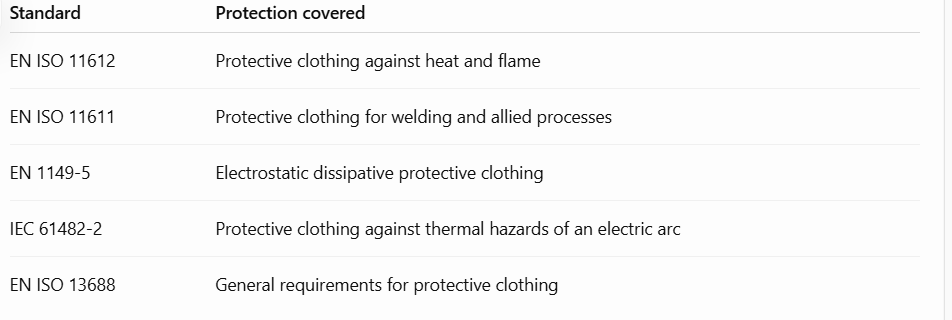
A garment may carry one or several of these certifications depending on its intended use.
Important: FR clothing, anti-static clothing and arc-rated clothing are not interchangeable terms.
A garment certified to EN ISO 11612 is not automatically suitable for arc-flash exposure. Likewise, anti-static certification alone does not establish flame or arc protection.
How to Select FR Coveralls
Before purchasing, check:
-
Required protection standards
-
Garment certification and performance levels
-
Fabric composition and weight
-
Inherent versus treated flame resistance
-
Available sizes and fit
-
Compatibility with other PPE
-
Project-specific colour and visibility requirements
For offshore projects, the operator's approved PPE specification should take precedence over general product descriptions.
2. Anti-Static Workwear for Hazardous Areas
Offshore oil and gas facilities may contain hazardous areas where flammable gases or vapours could be present.
Electrostatic discharge can be a potential ignition source under certain conditions.
Anti-static protective clothing is designed to help control electrostatic charge accumulation and discharge.
EN 1149-5 Explained
EN 1149-5 specifies material and design performance requirements for electrostatic dissipative protective clothing used as part of an appropriately grounded system.
It is commonly referenced for workwear used in potentially explosive atmospheres.
However, anti-static garments must be worn and used correctly.
Important considerations include:
-
Appropriate footwear and grounding arrangements
-
Proper garment closure
-
Suitable underlying clothing
-
Environmental conditions
-
Compatibility with other PPE
-
Manufacturer instructions
Anti-static clothing does not eliminate all ignition risks and should not be treated as a substitute for hazardous-area controls.
FR and Anti-Static Combination Workwear
For certain offshore applications, garments may be required to provide both flame resistance and electrostatic dissipative performance.
Portwest offers selected multi-standard garments designed to address these combined requirements.
Buyers should confirm that the exact garment model carries the certifications specified by the offshore operator.
3. Safety Footwear for Offshore and Marine Environments
Marine and offshore workers often operate on wet steel decks, ladders, grating, workshops and machinery spaces.
Footwear selection should consider:
-
Slip resistance
-
Toe protection
-
Penetration resistance
-
Water resistance
-
Oil and fuel exposure
-
Electrical hazards
-
Ankle support
-
Comfort during extended shifts
Portwest offers safety footwear in different protection categories.
EN ISO 20345 Safety Footwear Standards
EN ISO 20345 is a widely recognised standard for safety footwear.
Common classifications under the 2022 edition include:
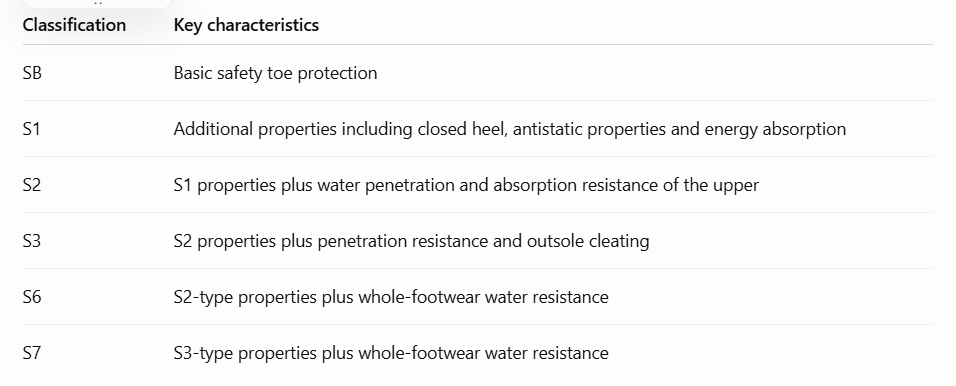
The precise classification and additional markings should be checked against the applicable edition of EN ISO 20345.
Slip Resistance on Wet Decks
Slip resistance is especially important for marine workers.
Modern EN ISO 20345:2022 footwear may carry an additional SR marking for specified slip-resistance testing.
However, laboratory slip-resistance performance does not guarantee slip prevention on every surface.
Wet steel, oil contamination, deck coatings and worn soles can affect real-world performance.
Recommended Selection Considerations
For general offshore deck work, a safety boot with suitable toe protection, penetration resistance, slip performance and water protection may be appropriate.
For specialised electrical work, additional footwear properties may be required.
Anti-static footwear is not the same as electrically insulating footwear.
The correct footwear should be selected according to the task risk assessment and site requirements.
4. Cut-Resistant and Impact-Resistant Gloves
Hand injuries are a significant concern in marine maintenance, cargo handling, mechanical work and offshore operations.
Workers may encounter:
-
Sharp metal edges
-
Wire ropes
-
Steel pipes
-
Heavy tools
-
Pinch points
-
Abrasive surfaces
-
Oils and lubricants
-
Mechanical impact hazards
Portwest offers various industrial gloves designed for different combinations of these risks.
Understanding EN 388
EN 388 covers protective gloves against mechanical risks.
The standard includes tests addressing:
-
Abrasion resistance
-
Blade cut resistance
-
Tear resistance
-
Puncture resistance
-
ISO cut resistance
-
Impact protection, where applicable
Example EN 388 Marking
4X43DP
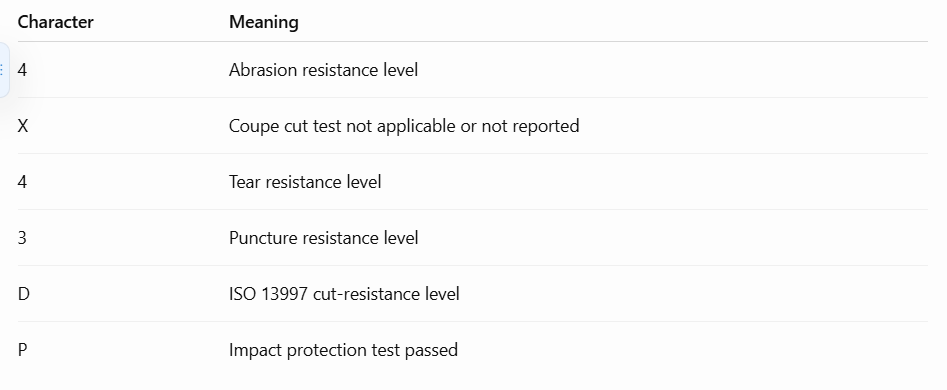
This is an illustrative marking, not a claim about any particular Portwest glove.
Cut-Resistant vs Impact-Resistant Gloves
Cut-resistant gloves are designed to reduce injury risks from sharp edges and cutting hazards.
Impact-resistant gloves incorporate features designed to protect against certain mechanical impacts.
Some gloves combine both functions.
For offshore pipe handling, mechanical maintenance and other high-risk tasks, buyers should evaluate both cut and impact protection.
However, no glove eliminates the risk of crushing injuries or entanglement with moving machinery.
Choosing Gloves for Different Tasks
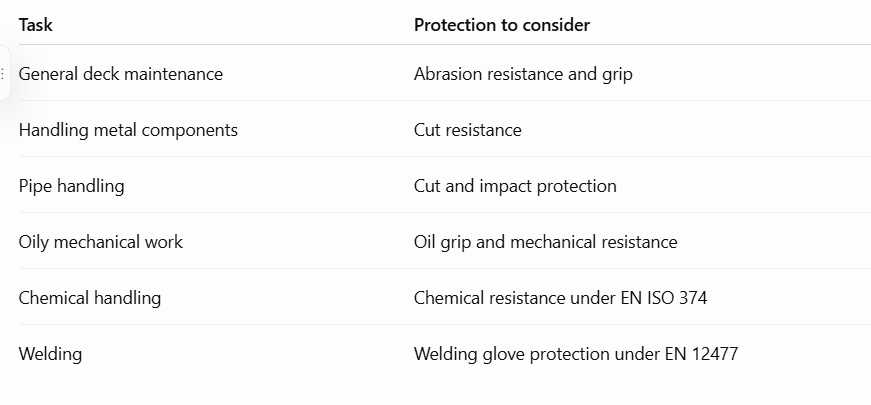
Glove selection should follow the actual hazards, including chemical exposure, dexterity and equipment-entanglement risks.
5. High-Visibility Workwear for Marine Operations
Visibility is important in busy industrial environments, particularly where workers operate near:
-
Forklifts
-
Trucks
-
Cranes
-
Cargo handling equipment
-
Mobile machinery
-
Port traffic
-
Ship loading operations
Portwest offers a broad range of high-visibility clothing, including jackets, trousers, vests and coveralls.
EN ISO 20471 Explained
EN ISO 20471 specifies requirements for high-visibility clothing intended to visually signal the wearer's presence.
It defines three performance classes.

Class 3 requires greater areas of fluorescent and retroreflective materials than the lower classes, together with applicable garment-design requirements.
Does Offshore Work Require Class 3?
Not automatically.
The appropriate class depends on the workplace risk assessment, lighting, traffic conditions and operator requirements.
For some marine applications, high-visibility clothing may also need to provide flame resistance or anti-static performance.
A conventional hi-vis vest should not automatically be worn over FR clothing in a flash-fire-risk environment.
The outer garment must also be appropriate for the identified hazards.
6. Waterproof and Wet-Weather PPE
Marine and offshore workers frequently face wind, rain, sea spray and changing weather conditions.
Wet-weather protective clothing can help maintain comfort and reduce exposure to adverse conditions.
Portwest offers waterproof jackets, trousers and other rainwear designed for industrial applications.
EN 343 Explained
EN 343 covers protective clothing against rain.
It addresses characteristics such as:
-
Resistance to water penetration
-
Water vapour resistance
-
Additional rain-related performance testing
The relevant performance classes appear on the garment's certification information.
What to Consider for Offshore Rainwear
When selecting waterproof workwear, consider:
-
Waterproofness
-
Breathability
-
Seam construction
-
Hood and cuff design
-
Durability
-
Visibility requirements
-
Compatibility with harnesses and other PPE
-
FR and anti-static requirements, where applicable
Standard waterproof rainwear is not automatically flame resistant or suitable for hazardous areas.
Where workers require both weather protection and FR performance, a suitably certified multi-protection garment may be necessary.
7. PPE Selection by Offshore Job Function
Different offshore roles have different hazards.
The following table provides a general starting point for PPE selection.
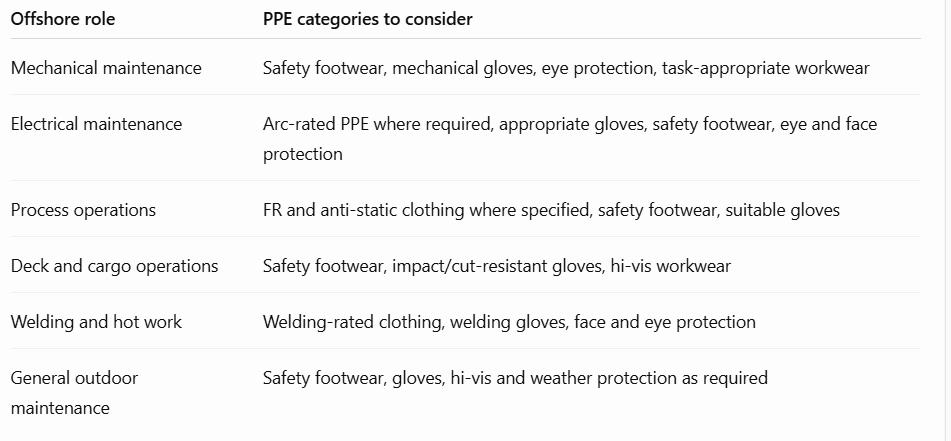
This table is not a substitute for a site-specific risk assessment.
Specialised tasks may require additional respiratory protection, hearing protection, fall protection or other safety equipment.
8. Why Multi-Standard PPE Matters Offshore
In many offshore environments, workers face several hazards at the same time.
For example, a worker may require clothing that provides:
-
Flame resistance
-
Electrostatic dissipative performance
-
High visibility
-
Weather protection
Using separate garments can sometimes create compatibility issues.
For this reason, multi-standard protective clothing may be preferable where it has been assessed for the combined hazards.
Portwest offers selected garments with multiple protective certifications.
However, buyers should check the exact model and certification rather than assuming that all products within a range provide the same protection.
9. How to Select Portwest PPE for an Offshore Project
Before ordering, the purchasing team should obtain the operator's PPE specification.
Key details include:
-
Required PPE category
-
Applicable EN, ISO, IEC or AS/NZS standards
-
Required performance levels
-
FR and anti-static requirements
-
High-visibility class
-
Footwear safety classification
-
Glove cut and impact ratings
-
Waterproof or chemical-resistance requirements
-
Approved garment colours
-
Sizes and quantities
-
Required product documentation
-
Delivery location and schedule
Product Certification Matters
A product described as “industrial”, “heavy duty” or “offshore suitable” should not be assumed to meet a particular safety standard.
For procurement purposes, verify:
-
Manufacturer's model number
-
Current product datasheet
-
Applicable certification
-
Declaration of Conformity, where relevant
-
Correct size and product variant
-
Site-specific approval requirements
Australian projects may also require compliance with applicable Australian standards or workplace regulations.
10. Common PPE Purchasing Mistakes
Selecting FR clothing without checking arc-flash requirements
Flame-resistant workwear is not automatically arc rated.
Choosing gloves based only on cut resistance
Some tasks also require impact, puncture, grip or chemical protection.
Assuming all safety boots are waterproof
Water-resistant uppers and whole-footwear waterproof performance are different characteristics.
Wearing ordinary rainwear over FR coveralls
An unsuitable outer garment may compromise the intended protective clothing system.
Selecting PPE only by product appearance
Two garments that look similar may have very different certifications and protection levels.
Ignoring the offshore operator's approved PPE list
A product meeting a recognised standard may still require project-specific acceptance.
11. Portwest PPE Supply for Marine & Offshore Customers in Australia
Marine Boys supplies and sources marine and industrial equipment for commercial vessels, offshore operations, shipyards and related industries.
Through our Portwest product range, customers can enquire about:
-
Flame-resistant workwear
-
Anti-static protective clothing
-
Arc-rated PPE
-
Industrial safety footwear
-
Cut-resistant gloves
-
Impact-resistant gloves
-
High-visibility clothing
-
Waterproof workwear
-
General industrial PPE
We can assist customers with identifying suitable product options based on their requested specifications and obtaining available manufacturer product information.
Product suitability, availability and certification should be confirmed before ordering.
Looking for Portwest PPE for Your Offshore Project?
Send Marine Boys your required PPE standards, product descriptions, sizes and quantities.
For replacement products, the existing Portwest product code or a photograph of the garment label can help identify the correct item.
Visit Marine Flame Resistant PPE - MARINEBOYS
Frequently Asked Questions
Is all Portwest workwear suitable for offshore oil and gas?
No. Portwest manufactures different categories of workwear and PPE. Offshore suitability depends on the exact product certification, identified hazards and operator requirements.
What standards should offshore FR coveralls meet?
Depending on the hazards, relevant standards may include EN ISO 11612, EN 1149-5, IEC 61482-2 and EN ISO 11611. Not every offshore task requires all these standards.
Are anti-static coveralls also flame resistant?
Not necessarily. Anti-static and flame-resistant performance are separate properties. Check the exact garment certification.
What type of safety boots are best for offshore work?
The appropriate footwear depends on the task and conditions. Slip resistance, toe protection, penetration resistance, water protection and other required properties should be assessed.
What gloves are suitable for offshore pipe handling?
Gloves with appropriate cut, abrasion, grip and impact protection may be suitable. Selection must account for the actual task and associated hazards.
Is EN ISO 20471 Class 3 mandatory offshore?
Not universally. The required high-visibility class depends on the operator's specifications and the workplace risk assessment.
Can ordinary waterproof jackets be worn over FR coveralls?
Not automatically. Where flame or flash-fire hazards exist, the complete clothing system must be appropriate for those hazards.
Conclusion
Marine and offshore PPE selection requires more than choosing durable workwear.
Different tasks may involve fire hazards, electrical risks, sharp materials, mechanical impacts, slippery surfaces, poor visibility and adverse weather.
Portwest offers a wide range of protective clothing, gloves, footwear and accessories that can support different industrial safety requirements.
However, the correct product must be selected according to its actual certification, performance level and the operator's approved PPE specification.
For offshore procurement teams, providing clear standards, product codes, sizes and quantities helps reduce ordering errors and ensures that suitable products can be evaluated.
Marine Boys can assist with Portwest PPE enquiries for marine, offshore oil and gas, shipyard and industrial customers throughout Australia.